_edited.png)
Chronic Pain Is Not Just Wear and Tear — It’s Inflammation
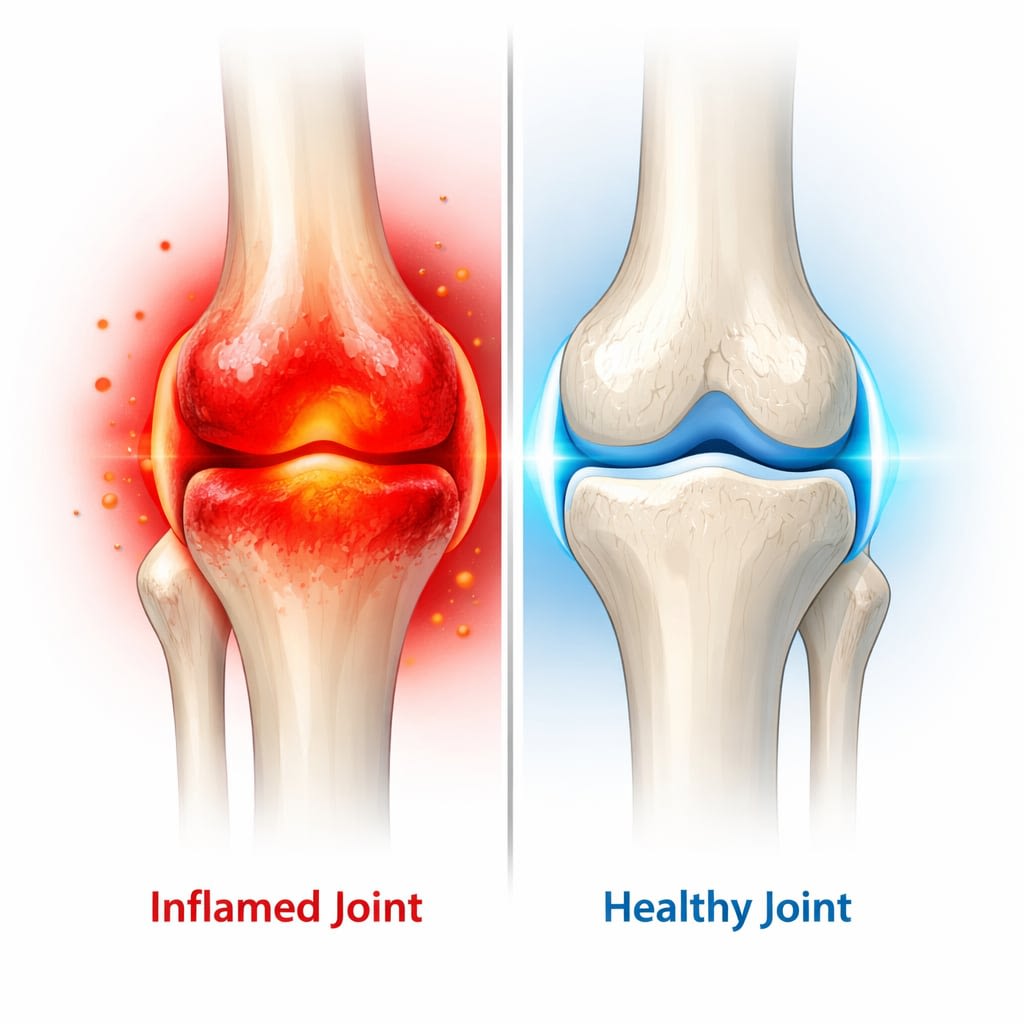
If you’ve been dealing with chronic pain—whether it’s in your knees, back, shoulders, or joints—you’ve probably heard this before:
👉 “It’s just aging.” 👉 “It’s wear and tear.” 👉 “There’s nothing much you can do.”
But what if that’s not the full story?
What if the real issue isn’t just structural damage—but something deeper happening inside your body?
The truth is: 👉 Most chronic pain is driven by inflammation.
🔬 What Is Inflammation?
Inflammation is your body’s natural response to injury.
When you get hurt, your body sends:
Blood flow
Immune cells
Healing signals
This is called acute inflammation, and it’s actually a good thing.
It helps you heal.
⚠️ When Inflammation Becomes a Problem
The issue begins when inflammation doesn’t turn off.
This is called: 👉 Chronic inflammation
Instead of helping, it starts to:
Irritate tissues
Sensitize nerves
Slow down healing
And over time, it becomes: 👉 pain
🧠 Why Chronic Pain Persists
Many patients are surprised when imaging doesn’t fully explain their pain.
You might hear:
“Your MRI looks okay”
“There’s only mild degeneration”
But you still feel significant discomfort.
Why?
Because: 👉 Pain is not just structural—it’s biochemical
Inflammation can amplify pain signals, making even minor issues feel severe.
💥 Common Areas Affected by Inflammation
Inflammation can affect almost every part of the body:
🔹 Joints
Knee pain
Shoulder pain
Arthritis
🔹 Spine
Lower back pain
Disc irritation
🔹 Muscles and Tendons
Tightness
Chronic strain
🧬 The Hidden Triggers of Inflammation
Chronic inflammation doesn’t just come from injury.
It can also be triggered by:
Poor diet
Stress
Lack of sleep
Hormonal imbalance
Metabolic issues
This is why some people heal quickly—while others stay stuck in pain.
💊 Why Traditional Pain Management Falls Short
Most traditional treatments focus on:
Pain medications
Muscle relaxers
While these can help temporarily, they often: 👉 Don’t address the root cause
They manage symptoms—but inflammation continues underneath.
🌿 A Functional Medicine Perspective
Instead of asking: 👉 “How do we stop the pain?”
A better question is: 👉 “Why is the pain still there?”
A functional approach looks at:
Inflammation levels
Lifestyle factors
Metabolic health
Recovery capacity
⚡ How Regenerative Therapies Can Help
Modern therapies are now focusing on: 👉 Stimulating the body’s natural healing
Treatments like shockwave therapy (StemWave) work by:
Improving blood flow
Stimulating tissue repair
Reducing inflammation signals
This creates an environment where the body can: 👉 Heal more effectively
🧠 Why Some Patients Improve Quickly
You may have seen cases where:
Pain improves after a session
Mobility increases
This is often because: 👉 Inflammation is reduced 👉 Circulation improves
Even small changes can lead to noticeable relief.
🔁 The Healing Process Takes Time
While some patients feel early relief, true healing is a process.
It requires:
Consistency
Proper treatment
Supporting the body
💡 What You Can Do Starting Today
To reduce inflammation and support healing:
Stay hydrated
Improve nutrition
Manage stress
Get quality sleep
Stay active within limits
🌟 The Bottom Line
Chronic pain is not always just “wear and tear.”
👉 It’s often a sign that your body is inflamed and struggling to heal.
When you address inflammation:
Pain decreases
Function improves
Healing becomes possible
💬 Final Thought
Your body is designed to heal.
But it needs the right environment to do so.
👉 Don’t just mask the pain—understand it. 👉 When you treat the root cause, everything changes.


Comments