_edited.png)
Why Your Body Stops Losing Weight — Even When You’re Doing Everything Right
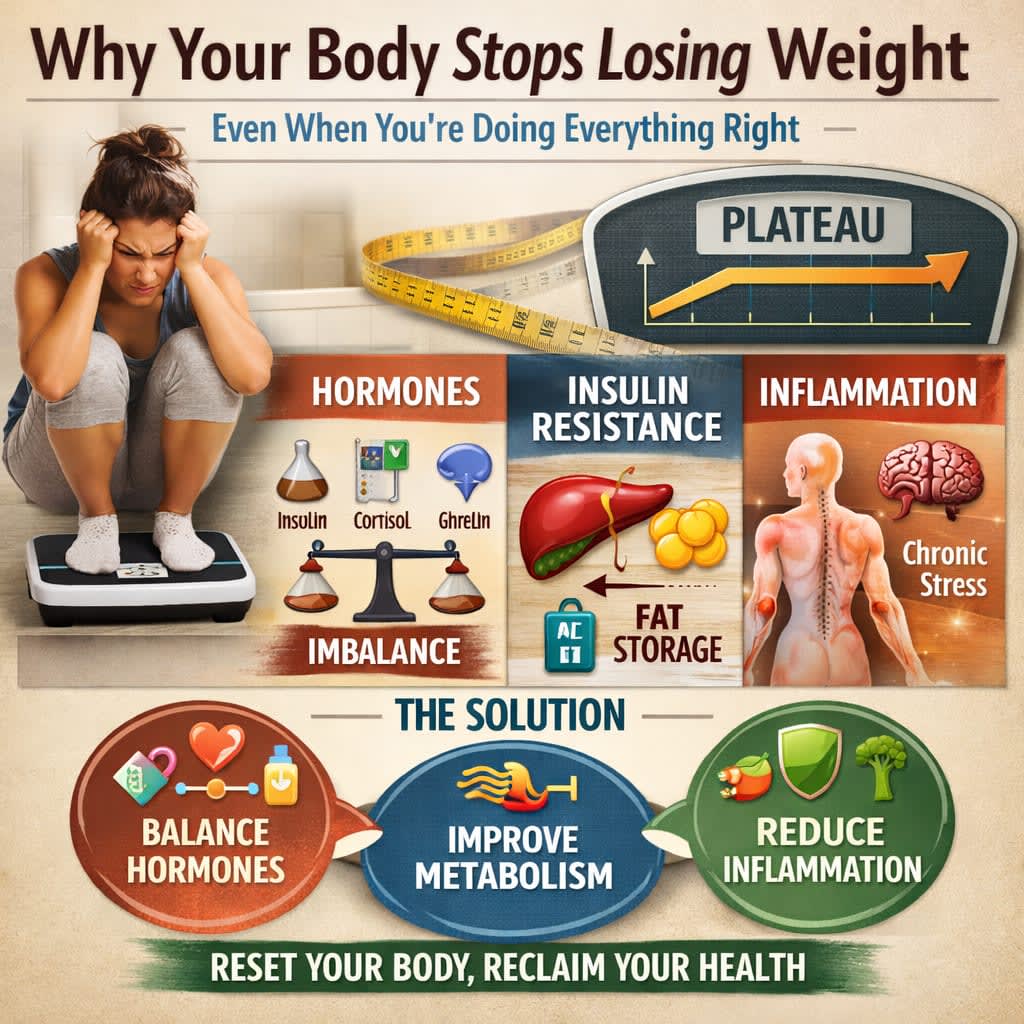
Have you ever felt like you’re doing everything right—but the scale just won’t move?
You’ve cleaned up your diet. You’re trying to stay active. You’ve cut calories and avoided unhealthy foods.
But despite all your effort, your weight loss suddenly stops.
This is one of the most frustrating experiences for patients trying to improve their health—and one of the most misunderstood.
The truth is: 👉 It’s not always about discipline. 👉 It’s often about biology.
⚖️ Understanding the Weight Loss Plateau
A weight loss plateau happens when your body stops losing weight despite continued effort.
At the beginning of a weight loss journey, progress can be rapid. But over time, your body adapts.
This adaptation is not failure—it’s survival.
Your body is designed to protect you. When it senses weight loss, it may respond by slowing things down.
🧠 Your Body Is Protecting You
From a biological standpoint, your body doesn’t know you’re trying to “lose weight.”
Instead, it may interpret changes as: 👉 “We are losing energy—let’s conserve.”
So it responds by:
Slowing metabolism
Increasing hunger signals
Holding onto fat stores
This is your body trying to maintain balance.
🔬 The Real Causes Behind Weight Loss Resistance
Let’s look deeper into what’s happening inside your body.
1. Hormonal Imbalance
Hormones are the control system of your metabolism.
Key hormones involved include:
Insulin
Cortisol
Leptin
Ghrelin
When these hormones are out of balance, your body may:
Store more fat
Burn fewer calories
Increase cravings
This makes weight loss much harder—even with a healthy lifestyle.
2. Insulin Resistance
One of the most common reasons patients hit a plateau is insulin resistance.
When your body becomes less sensitive to insulin:
Blood sugar stays elevated
Fat storage increases
Energy levels fluctuate
Even if you’re eating less, your body may still be in fat storage mode.
3. Chronic Inflammation
Inflammation plays a major role in metabolic health.
When inflammation becomes chronic, it can:
Disrupt hormone signaling
Slow metabolism
Increase fatigue
This creates an environment where weight loss becomes difficult.
4. Stress and Cortisol
Stress is often overlooked but extremely important.
When stress levels are high:
Cortisol increases
Fat storage (especially abdominal fat) increases
Cravings for sugar and carbs rise
Even with a perfect diet, chronic stress can block progress.
5. Metabolic Adaptation
As you lose weight, your body requires fewer calories.
If your approach doesn’t adjust, your metabolism slows down to match your intake.
This is known as: 👉 Metabolic adaptation
💊 Why Traditional Weight Loss Approaches Fall Short
Most traditional programs focus on:
Calories
Exercise
While these are important, they don’t address:
Hormonal balance
Insulin resistance
Inflammation
That’s why many people see: 👉 Initial success 👉 Followed by a plateau
🌿 A Functional Medicine Approach
Instead of forcing weight loss, a functional medicine approach focuses on understanding the body.
We ask: 👉 “Why is the body resisting weight loss?”
This approach looks at:
Hormones
Metabolism
Gut health
Inflammation
Lifestyle factors
When these are addressed, the body can begin to respond again.
💉 How Medical Weight Loss Can Help
Medical therapies can support your body’s natural processes.
GLP-1 medications like:
GLP-1
Combination of GIP and GLP-1
Help by:
Reducing appetite
Improving insulin sensitivity
Supporting metabolic balance
This allows your body to: 👉 Work with your efforts—not against them
🌊 The Role of Metabolic Reset Programs
Structured programs—like a metabolic reset approach—help:
Rebalance hormones
Support detox pathways
Improve fat metabolism
These programs are designed to: 👉 Break through plateaus 👉 Restore metabolic function
🧠 Mindset Shift: It’s Not Failure
One of the biggest mistakes patients make is blaming themselves.
Instead of thinking: ❌ “I’m not doing enough”
Shift to: ✅ “My body needs a different strategy”
This shift changes everything.
🔁 How to Break Through a Plateau
Here are key steps:
Address hormone imbalances
Improve insulin sensitivity
Reduce inflammation
Manage stress levels
Adjust your plan as your body changes


Comments